Establishing a Leadership Development Program

Leadership development is a journey, not a book to read or a one-time training class. It is learned through ongoing coaching, practical experience, and feedback.

What is a Leadership Development Program?

A business is only as strong as its people, and each manager plays a critical role in delivering success. Although many managers know what they should be doing to lead well, it gets de-prioritized in the daily whirlwind. The intent is good, but the execution fails due to the lack of a consistent, prioritized leadership development structure and a heartfelt commitment to inspire, enable, and hold people accountable.

The result? Employees leave, are misaligned, or worse, they are disengaged or non-productive, sinking your corporate strategy and company culture.

To combat this, organizations need a Leadership Development Program that establishes and fosters:

  • a common leadership playbook (capabilities, tools, language, and agreements),
  • a culture built on trust and teamwork, and
  • a structured, recurring leadership practice, resulting in on-strategy, high-performing teams.

A Leadership Development Program should be designed to be ongoing, lightweight, and seamlessly integrated into a leader’s routine, rather than disrupting it. This is not a one-and-done training session, but an ongoing practice incorporating tools and activities that enable leaders not only to learn, but also to apply their learnings practically. This approach helps them develop the habits that lead to long-term success.

Building Blocks

How Do You Get Your Leadership Development Program Started?

Building a leadership development program within your organization is a crucial step towards ensuring that your management team is not only equipped to meet today's current challenges, but also prepared to anticipate and respond to future demands.

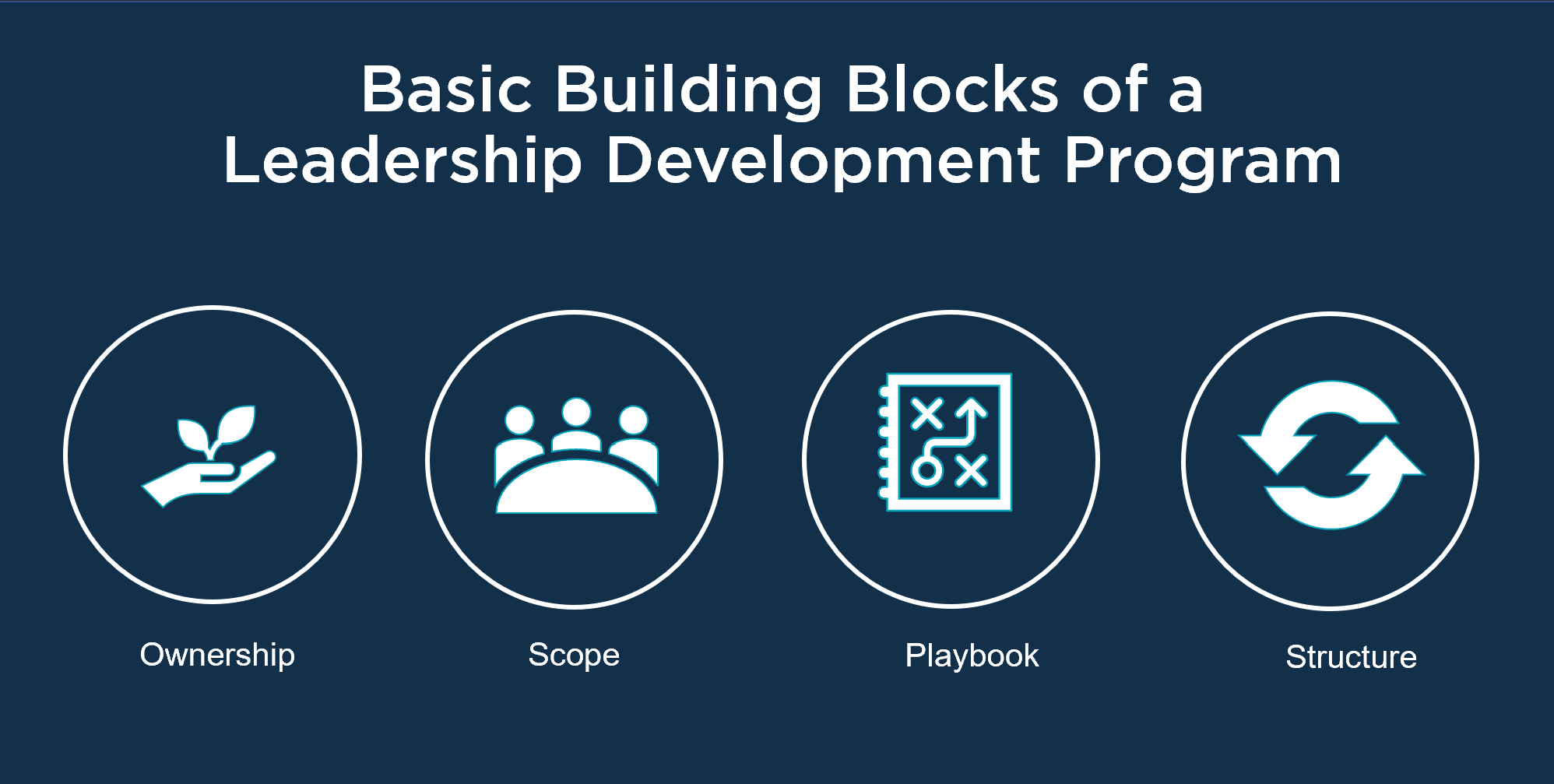
The scope of an effective program should encompass every manager in the company, not just the executive team or high potentials. Depending on your organization's size, dedicating at least one, full-time person—or even assembling a larger team—to develop and manage this program is essential. These individuals are responsible for designing the program, aligning it to achieve corporate objectives, overseeing its implementation, monitoring its performance, and making necessary adjustments. This approach allows for a tailored and sustainable development strategy that reflects your organization's specific needs and goals, and ensures structured accountability to prevent daily activities from overshadowing development efforts.

The reality of budget constraints, however, can sometimes limit ideal initiatives. If resources are tight, launching a leadership development program without significant financial investment is still feasible. By assigning ownership to a key stakeholder, defining a clear program outline, creating a leadership playbook, and establishing some structure, you can effectively leverage existing internal resources for training and development. The key is to cultivate a culture of continuous learning and self-improvement, leveraging the knowledge and skills within your existing teams. 

For organizations seeking a more structured approach, but lacking the time, internal resources, and know-how to fully implement it, partnering with a outside firm to deliver leadership development in a fractional capacity (leadership development as a service) is a viable, efficient, and cost-effective option. This provides the necessary structured support without the overhead of extensive internal hiring, offering a scalable solution that grows with your needs.

By considering these approaches, you can establish a leadership development program tailored to your organization's specific context and constraints, ensuring all managers are well-prepared to lead effectively.


Good


 Bootstrap a Leadership Development Initiative


This option represents a cost-effective, grassroots approach to leadership development using existing resources and minimal financial investment. Ideal for organizations just starting their journey, or those with tight budget constraints.

  • Low Cost: Leverages existing resources and internal expertise to keep costs low.
  • Self-Managed: Encourages a do-it-yourself approach where a key stakeholder takes ownership of driving the initiative.
  • Peer Learning: Utilizes peer-led workshops and mentoring circles to foster a collaborative learning environment.
  • Flexibility: Easily scalable and adaptable, allowing for incremental enhancements as resources become available.
  • Cultural Shift: Promotes a culture of continuous learning and development from within, boosting engagement and motivation.

DOWNLOAD YOUR FREE E-GUIDE TO START BUIDING A PROGRAM TODAY

Better


  E3 Leadership Development Program as a Service.


This option involves outsourcing your organization’s leadership development needs to a specialized firm like E Equals Why, which brings professional expertise and proven methodologies to elevate your leadership capabilities efficiently.

  • Leadership Development Expertise: Gain access to external expertise and best practices in leadership development from seasoned professionals.
  • Turnkey Solutions: Receive comprehensive, ready-to-implement leadership training programs tailored to your specific organizational needs.
  • Cost-Effective: Avoid the overhead of hiring full-time staff while benefiting from top-tier leadership development resources.
  • Scalability: Easily scale up or down based on your evolving leadership training needs without the logistical complexities of internal program management.
  • Continuous Innovation: Benefit from the latest trends and best practices in leadership training without the need to constantly update internal capabilities.

DOWNLOAD YOUR E3 LEADERSHIP DEVELOPMENT AS A SERVICE GUIDE

Best


Dedicated Leadership Development Team


 Opt for an in-house approach by hiring a dedicated team or individual to develop and manage your leadership development programs. This option allows for deeply integrated, customized training that aligns closely with your organization's culture and goals.

  • Custom Integration: Tailor every aspect of the leadership development process to fit your organizational culture and strategic objectives.
  • Ongoing Adaptation: Easily adapt and modify leadership programs in response to internal feedback and changing business needs.
  • Deep Engagement: Foster a deeper connection and understanding within the team, enhancing the relevance and impact of training initiatives.
  • Full Control: Maintain complete control over the content, delivery, timing, and evolution of the leadership development curriculum.
  • Long-Term Investment: Build a lasting infrastructure for leadership excellence that grows and evolves with your organization.

DOWNLOAD YOUR FREE BUSINESS CASE AND SAMPLE JOB DESCRIPTION

Each of these options has its merits, and the right choice depends on your organization’s size, budget, and strategic priorities. Regardless of the path chosen, the commitment to developing leaders within your organization is a commendable and strategic initiative that promises long-term benefits.